
Estimated Reading Time: 6 Minutes
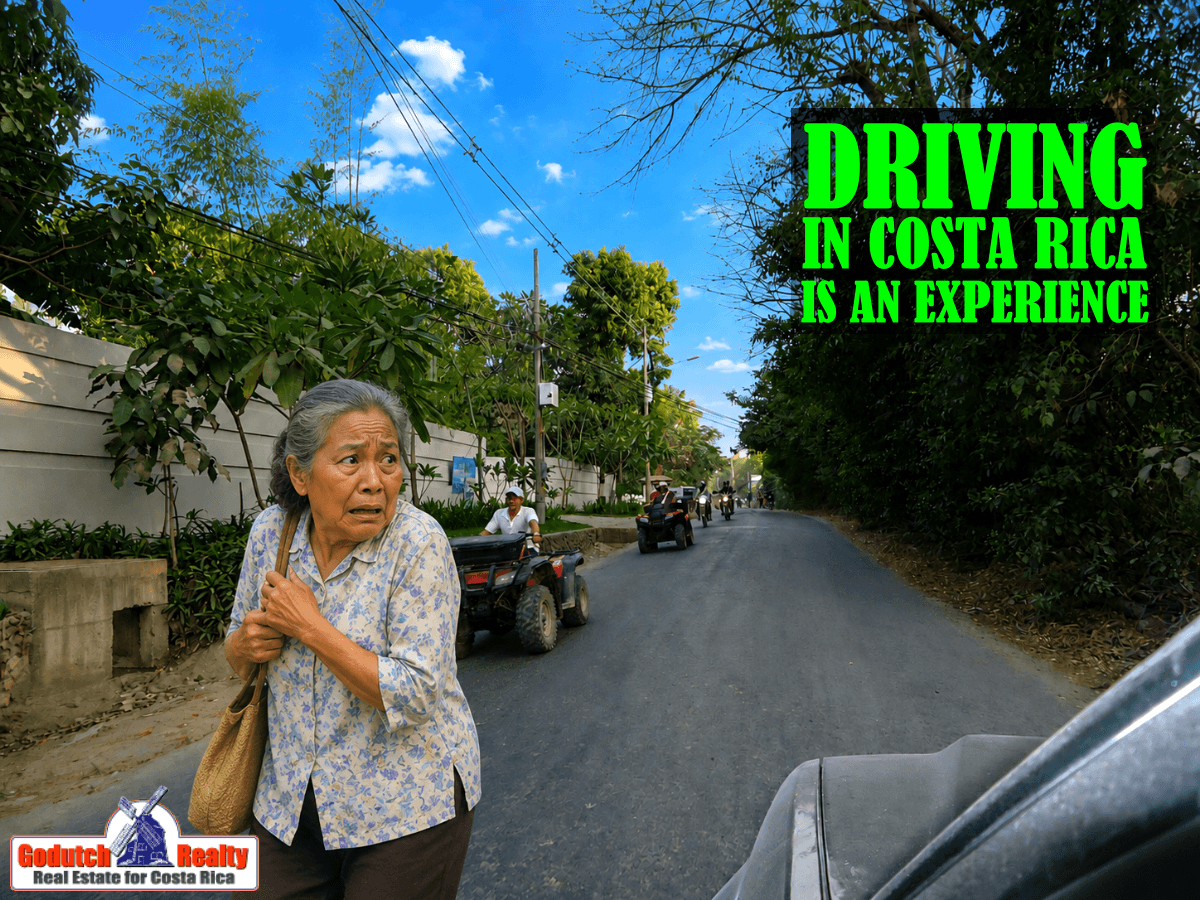
How difficult is driving in Costa Rica? I am now assuming for a minute that you have a valid driver’s license. For many foreigners moving to or visiting Costa Rica, getting behind the wheel is an adventure. It is unlike any they’ve experienced before. While most countries follow the same basic rules of the road—driving on the right-hand side—everything else can feel refreshingly different.
In the United States, for example, roads are generally wide, well-marked, and designed for speed and efficiency. GPS directions are reliable, addresses are straightforward, and traffic laws are consistently enforced. In Costa Rica, driving requires a bit more patience, flexibility, and common sense.
Many roads are narrower and wind through mountains, valleys, and small villages. It is not uncommon to encounter potholes, unmarked speed bumps, one-lane bridges, or livestock crossing the road. Moreover, during the rainy season, landslides and flooding can temporarily affect road conditions, especially in rural areas.
Traffic in the metropolitan area around San José can be surprisingly heavy, while outside the cities, drivers share the road with bicycles, motorcycles, pedestrians, buses, and even ox carts. Defensive driving is not just recommended—it is essential.
Another adjustment is navigation. Costa Rica is famous for its “directions by landmarks” rather than street addresses. Instead of driving to “123 Main Street,” you might be told to go “200 meters west of the old church, next to the large mango tree.” Fortunately, apps like Google Maps and Waze have made getting around much easier.
Pura Vida
One of the greatest rewards of driving in Costa Rica is the scenery. A simple drive to the beach or the mountains often takes you through coffee plantations, tropical forests, waterfalls, volcanoes, and breathtaking viewpoints. The journey frequently becomes as memorable as the destination itself.
Driving in Costa Rica may require a change in expectations, but it also encourages travelers to slow down and embrace the country’s famous Pura Vida lifestyle. With patience, courtesy, and a sense of adventure, you’ll soon discover that every road has a story to tell.
Speed Control
The kickback style of Costa Rica’s citizens is reflected in the posted speed limits throughout the country. Remember, I said “posted” speed limits. Sometimes, even I find it hard to drive at 25 km per hour. (I don’t think my car knows how to run smoothly at that speed). That kind of makes driving in Costa Rica more difficult.
The highest posted speed in this country that I have observed, to date, is 90 km (about 56 mph). It’s in one place and only lasts for a few kilometers. However, no matter what road you travel in Costa Rica, you will find yourself behind a bus or a slow-moving, fully loaded truck. Then your speed will be controlled by them.
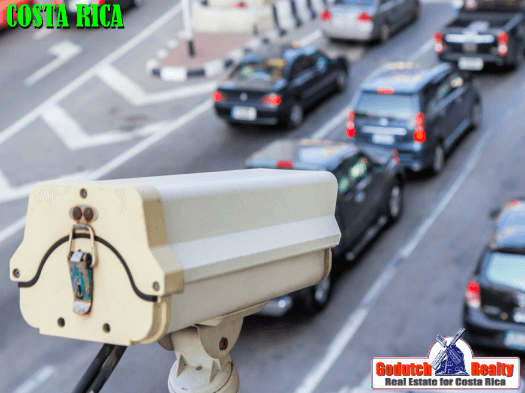
However, Costa Rica will probably pass a law to control speed soon again. This was stopped by the famous Sala IV, for being unconstitutional. Authorities may install electronic speed cameras on bridge underpasses along all of the major highways. Eventually, speed cameras will be present throughout the entire country.
Speeding laws will be enforced by taking a picture of speeding cars’ license plates and emailing you a ticket. I guess high-tech law enforcement will finally be coming to Costa Rica. It will make driving in Costa Rica a lot safer.
Speeding Fines
In my opinion, traffic speeding fines are excessive when compared to the capita income of the average Costa Rican. The electronic speeding law has not been implemented. But when turned on, my guess is there will be some very unhappy Costa Ricans — probably almost every driver in this country.
They will be most unhappy at the prospect of actually being ticketed for their speedy driving in Costa Rica, which is pervasive. I fear the driver’s displeasure will be expressed rather vociferously in protests and rallies. I know I certainly won’t be very happy when it comes.
Transit Police
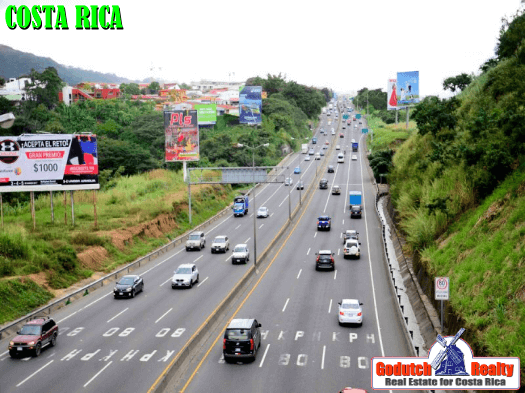
Today all traffic enforcement and vehicle registration is the job of the Policia de Transito. There is a huge shortage of them, so you might see them once in a while, always in a place where they will catch drivers at something. Often, they set up random traffic checks or roadblocks looking for drivers with vehicles with out-of-date registrations, drug and gun control. They mostly respond to traffic accidents. They have their hands full with that.
Some traffic police do speak English. But if you make a mistake while driving and you get stopped, you might get away by playing stupid, not understanding the language and repeating “I’m sorry” or using the word “perdón“. Don’t try to bribe them, you might end up in jail.
Riteve
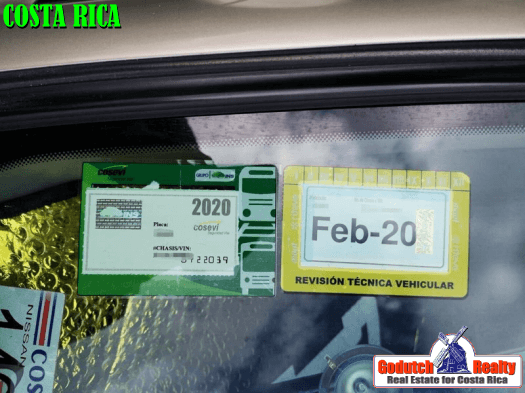
Just be certain that your vehicle’s Riteve stickers are current and you carry your current I.D. (passport and/or cedula), car registration, and insurance info. Then you probably won’t be hassled while driving in Costa Rica, even if you are stopped. Additionally, do NOT forget that you can only use your out of the country driver’s license for as long as you have a visa that’s current.
Every Costa Rican vehicle on the road carries a “Riteve” sticker on its windshield. The Riteve, now Dekra, is your vehicle’s registration and inspection. It must pass the mandatory annual safety inspection to be renewed. There are many Dekra inspection offices.
Crossing one-lane bridges
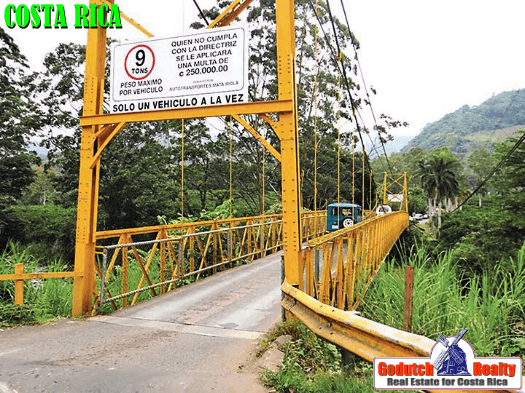
I know I’ve covered this topic before, but I have a new observation or two regarding them. First, they started out as small wooden bridges every time ox carts crossed over rivers or streams. Second, there were lots of ox paths, lots of rivers and streams, and lots of crossings. That means today there are lots of one-lane bridges. Almost all have a “CEDA” or yield sign on one side or the other.
There is an unwritten law here that states, “if no oncoming traffic is observed, everyone behind the first car crossing on the yielding side gets to cross with him” regardless of how many cars are now stacked up on the right of wayside of the bridge. I’m not saying it is not logical, wrong or even illegal, just be prepared that that’s the way it works here.
Emergency vehicles
With its lights flashing, the police car waits patiently in the string of vehicles lined up behind the slow-moving truck ahead. What’s wrong with this picture? If you live in Costa Rica, nothing.
Pulling over to let emergency vehicles is not a given, but I must admit it’s getting better. Be aware of some drivers trying to follow the ambulance or other emergency vehicle bumper to bumper for faster arrival.
Motorbikes
Drivers in Costa Rica must stay alert for motorcycles, as they often filter through traffic, overtake between lanes, and can appear suddenly in blind spots. Many roads are narrow and congested, making it essential to check mirrors frequently (hopefully you’ll have 25 mirrors), signal well in advance, and give motorcyclists plenty of space to help prevent accidents.
Stop signs
One last comment: all stop signs in Costa Rica are merely a suggestion. Unless they are complemented by a nearby policeman or oncoming traffic.
I am Ivo Henfling, the founder of GoDutch Realty, widely regarded as the leading real estate authority in Costa Rica. Did you enjoy my topic today? Then feel free to leave your comments on this blog, share it on your social media, or contact me to purchase a property. Would you like a Zoom meeting with me?